

Surge Load and Structural Stress Analysis of Data Center Fire Sprinkler System
Transient surge events such as pump start-up, rapid valve closure, and emergency isolation can generate significant dynamic forces in fire sprinkler piping systems — particularly in mission-critical facilities like data centers. While steady-state hydraulic design ensures adequate flow performance, it does not capture the structural impact of pressure waves and water hammer effects. This case study presents an integrated approach combining surge load evaluation with detailed piping stress assessment. Dynamic elbow thrust forces were quantified for multiple operating scenarios, and the governing loads were applied to a structural model to validate supports, anchors, and buried pipeline segments.
FINITE ELEMENT ANALYSIS
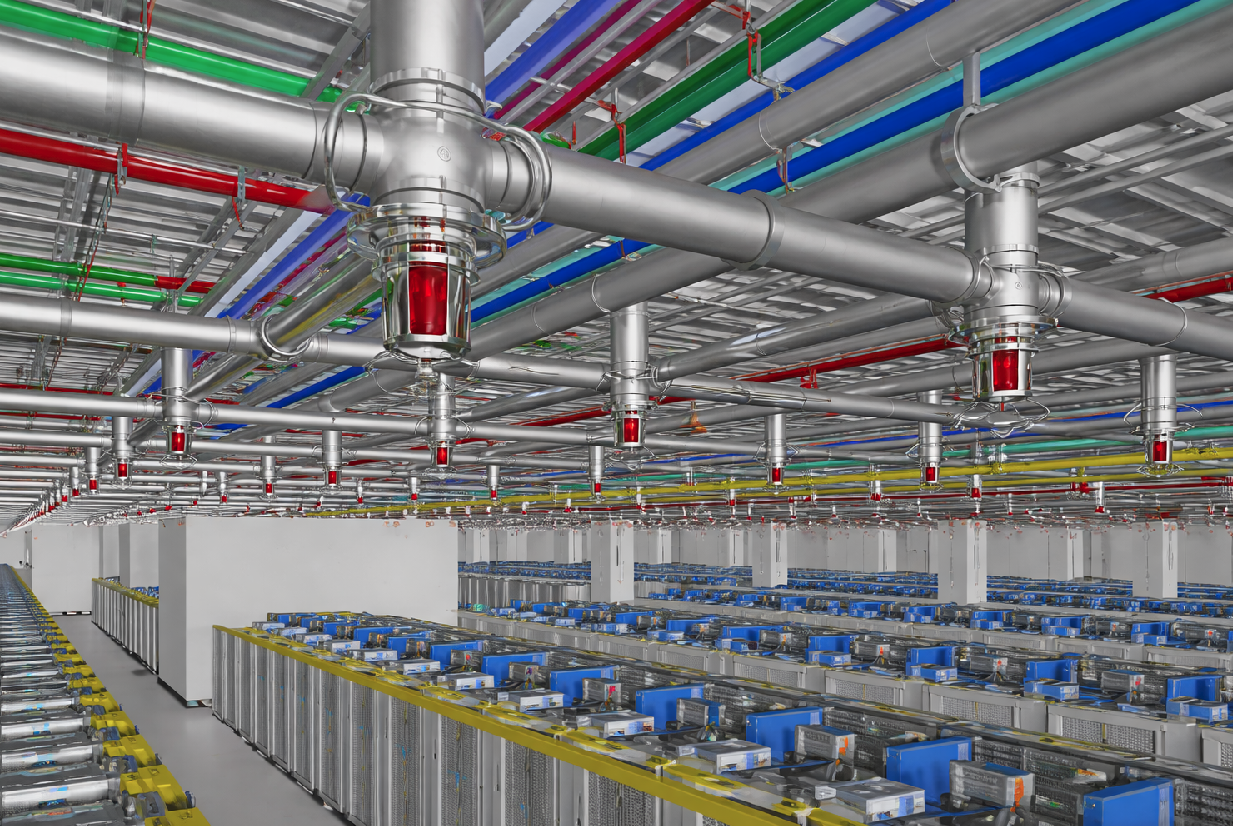
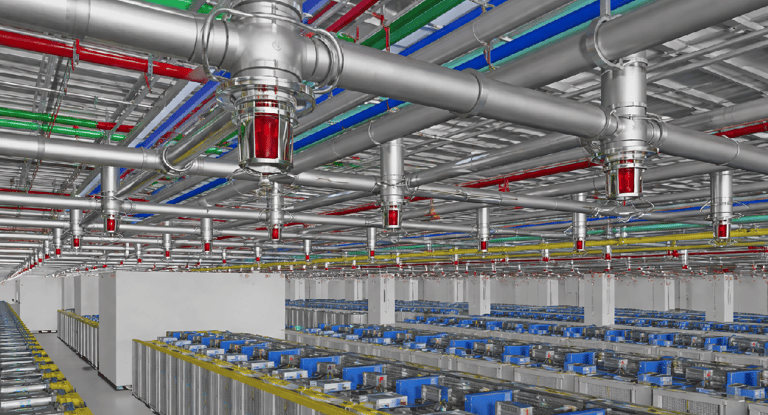
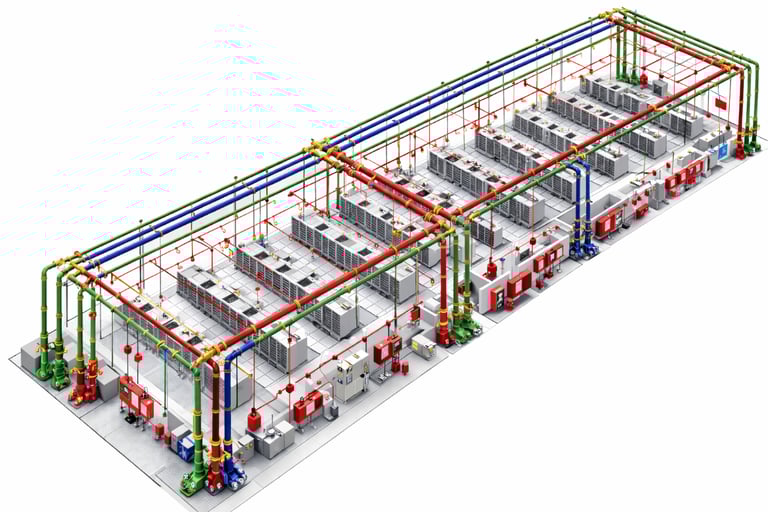
Case Study: Surge Analysis of a Data Center Fire Sprinkler System
Project Overview
Modern data centers demand extremely high reliability in fire protection systems. While sprinkler systems are primarily designed for hydraulic performance and fire coverage, transient events (surge / water hammer) during pump start-up, valve closure, or emergency isolation can generate significant forces in piping networks.
This project involved:
Transient surge analysis of the sprinkler network
Calculation of dynamic forces at elbows and fittings
Structural stress evaluation of piping
Buried pipeline stress assessment
Validation of supports and anchors under extreme scenarios
Calculations were performed as per NFPA requirements
Engineering Challenge
Data center fire systems operate under:
High flow discharge scenarios
Emergency pump start conditions
Rapid control valve actuation
Long distribution headers
Combination of above-ground and buried piping
During transient conditions, pressure waves travel at high velocity, generating:
Axial thrust forces at elbows
Bending moments at branch connections
Anchor loads exceeding steady-state assumptions
Soil–pipe interaction stresses in buried lines
Failure to evaluate these effects may result in:
Support failure
Joint leakage
Excessive displacement
Structural damage
Methodology
Step 1 – Transient Hydraulic Surge Analysis
A full network transient model was developed including:
Fire pump start-up curve
Check valve behavior
Control valve closure scenarios
Worst-case simultaneous sprinkler activation
Emergency isolation cases
Time-history pressure profiles were generated across the network.
From the transient simulation:
Dynamic forces at elbows
Resultant thrust forces
Time-dependent peak loads
were calculated for all operating scenarios.
The maximum governing force at each critical location was identified for structural evaluation.
Step 2 – Piping Stress Analysis
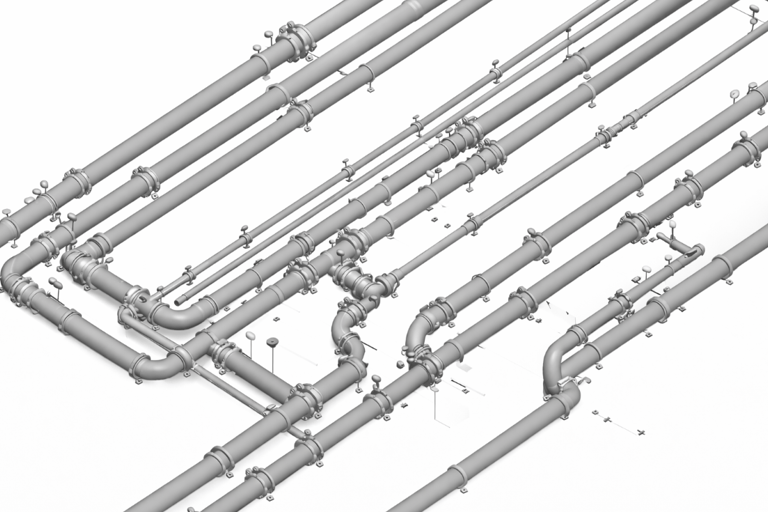
The maximum transient forces were applied to a detailed piping stress model to evaluate:
Sustained stresses
Occasional loads (surge events)
Combined load cases
Support reactions
Anchor forces
The analysis verified compliance with relevant piping stress codes applicable to fire protection systems.
Key evaluations included:
Elbow bending stresses
Support load adequacy
Anchor design validation
Displacement limits
Step 3 – Buried Pipeline Analysis
Portions of the fire loop were buried. A dedicated buried pipe evaluation was performed considering:
Soil stiffness
Backfill properties
Burial depth
Pipe–soil interaction
Longitudinal thrust due to surge
The study evaluated:
Axial stress due to transient thrust
Combined stress due to internal pressure + soil load + surge
Anchor block requirements
Differential settlement risk
Critical Scenarios Studied
Sudden fire pump start
Rapid valve closure
Check valve slam
Emergency system isolation
Full sprinkler discharge case
The most severe transient event was used as the governing structural design case.
Key Findings
Surge pressures significantly exceeded steady-state operating pressure.
Elbow thrust forces were substantially higher than assumed in static design.
Select supports required reinforcement.
Anchor loads were validated and optimized.
Buried segments required verification of thrust restraint design.
Post-Processing and Key Results
Key outputs analyzed include:
von Mises stress distributions across the mounting structure
Maximum deflection of rails and support columns
Identification of stress concentration zones at:
Base plates
Anchor bolts
Clamp and rail connections
Governing Conditions
Wind uplift and normal pressure cases were found to control the structural design.
All stresses and deflections remained within allowable limits per applicable material and design criteria.
Engineering Outcomes
✔ Validated system integrity under extreme surge conditions
✔ Ensured structural reliability of fire protection network
✔ Reduced risk of water hammer-induced failure
✔ Confirmed compliance with piping design standards
✔ Delivered a surge-resilient fire sprinkler infrastructure
Industrial Applications
The methodology employed in this study is applicable to many industries where fluid transients and structural load interactions are critical, including:
Mission-critical fire protection systems (data centers, telecom hubs)
Petrochemical and refinery firewater networks
Power generation fire suppression piping
Large commercial building fire systems
Industrial process piping with high-capacity pumps
Municipal water distribution systems with surge risks
Benefits to Industries
Reliability Enhancement
Prevents unexpected failures due to transient overloading.
Risk Reduction
Minimizes risk of pipe rupture, joint leakage, and support collapse.
Insurance & Compliance Confidence
Provides documented verification for audits and insurer requirements.
Cost Optimization
Avoids overdesign while ensuring safety through quantified loads.
Lifecycle Protection
Reduces long-term maintenance and downtime risk.
Author Linkedin Profile
+91-9879488468
© 2025. All rights reserved.