

Wind Load Resistance Analysis of Photovoltaic (PV) Module Mounting Structures
This project showcases a wind load resistance analysis of a PV module mounting structure using advanced FEA, aligned with IS, ASCE, and Eurocode wind standards.
FINITE ELEMENT ANALYSIS
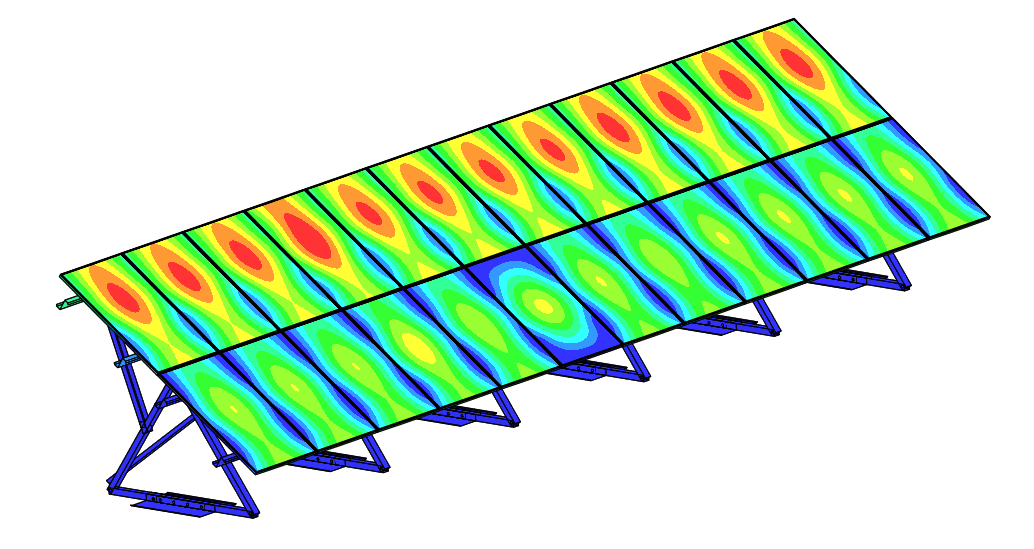
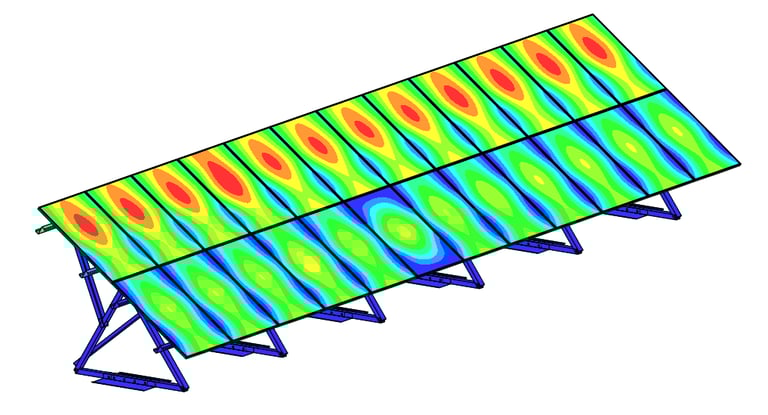
Case Study: Wind Load Resistance Analysis of Photovoltaic (PV) Module Mounting Structures
Project Overview
This case study presents a Finite Element Analysis (FEA)–based structural assessment of a Photovoltaic (PV) Module Mounting Structure subjected to design wind loads.
The objective was to verify structural integrity of the support frame, mounting rails, bracing members, and anchorage system under governing wind pressure and uplift conditions.
Wind loads were applied using an equivalent static approach, consistent with internationally recognized wind design standards, to ensure compliance, safety, and long-term reliability of the PV installation.
Applicable Design Standards
The wind load evaluation and structural verification were aligned with the following widely adopted standards:
IS 875 (Part 3): 2015 – Wind Loads on Structures
ASCE 7-16 / ASCE 7-22 – Minimum Design Loads for Buildings and Other Structures
EN 1991-1-4 (Eurocode 1) – Wind Actions
IEC 61215 / IEC 61730 (reference) – Mechanical load considerations for PV modules
Wind pressure coefficients, exposure categories, gust effects, and load combinations were derived in accordance with these standards.
Objectives of the Study
The primary objective of this case study is to:
Define design wind pressure and uplift loads acting on PV modules
Evaluate stress, deformation, and load transfer paths in the mounting structure
Identify critical wind directions and governing load cases
Verify structural adequacy and anchorage performance under extreme wind events
Geometry and Structural Model
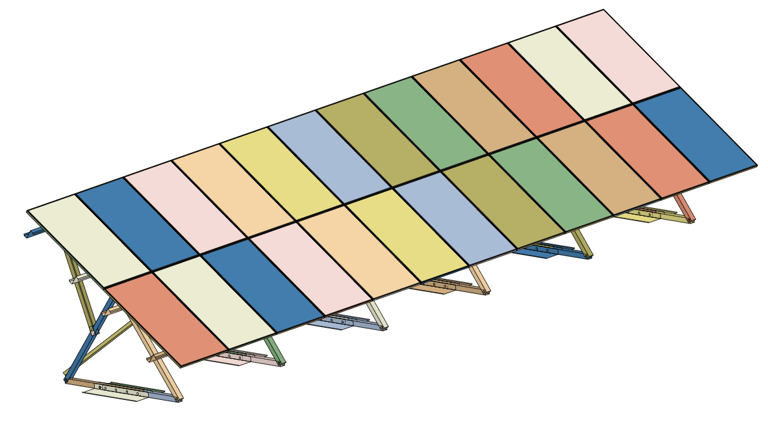
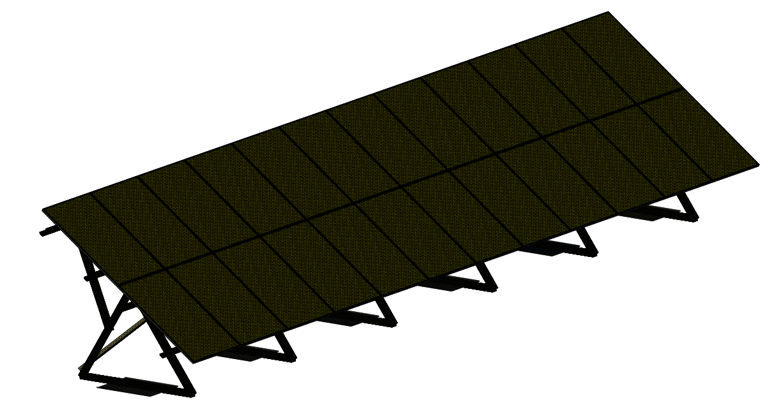
PV Mounting Structure System
PV Mounting Structure System
Steel support posts and beams
PV module mounting rails and clamps
Bracing members for lateral stability
Base plates and anchor bolts connected to foundations
CAD geometry imported directly into the FEA environment
PV modules were represented as pressure-carrying surfaces transferring wind loads into the structural frame.
Wind Load Definition
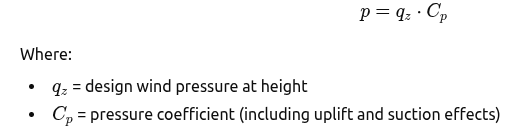
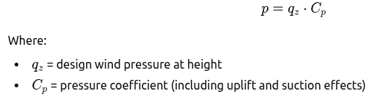
Design wind pressure was calculated using the standard formulation:
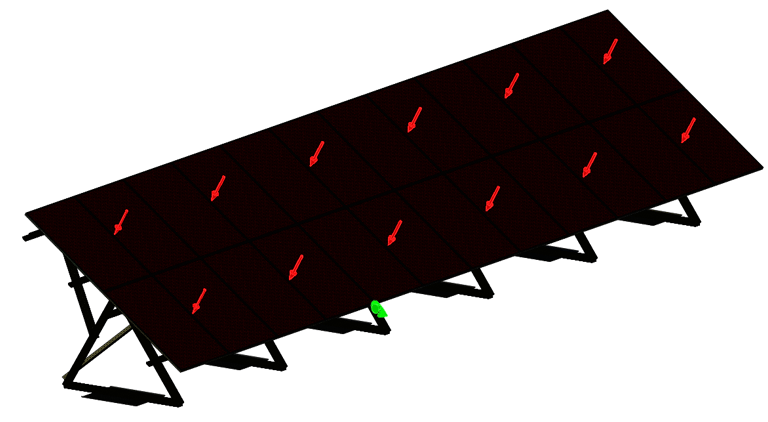
The resulting distributed pressures were applied as equivalent static loads normal to the PV panel surfaces.
Simulation Methodology
Geometry & Meshing
Solid 3D finite elements used for structural members
Local mesh refinement at:
Base plates
Clamp connections
Bracing intersections
Load Cases
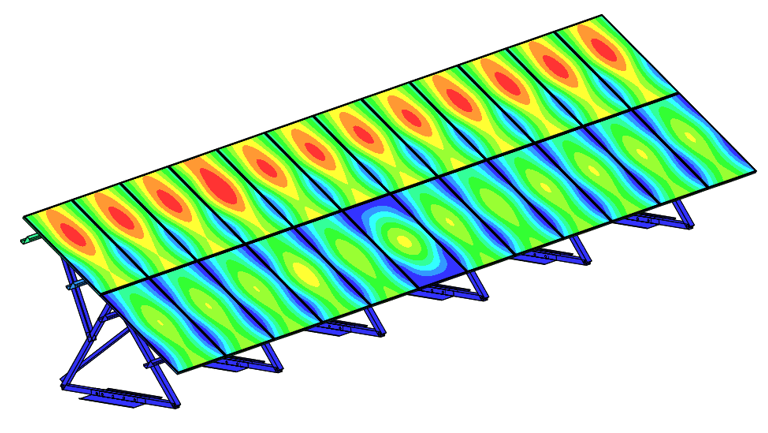
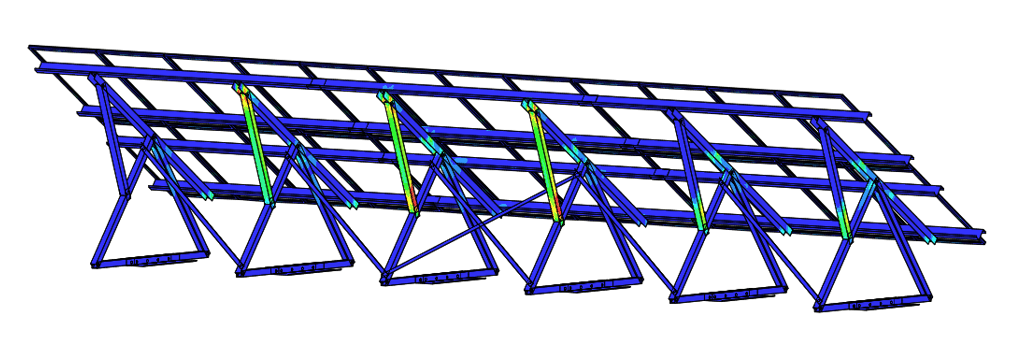
Wind acting normal to panel plane (only one load case results shown)
Wind uplift (suction on rear face)
Wind acting parallel to PV rows
Boundary Conditions
Fixed / anchored supports at foundations
Realistic restraint conditions for structural stability
Solver
Linear static analysis performed for all wind load cases
Post-Processing and Key Results
Key outputs analyzed include:
von Mises stress distributions across the mounting structure
Maximum deflection of rails and support columns
Identification of stress concentration zones at:
Base plates
Anchor bolts
Clamp and rail connections
Governing Conditions
Wind uplift and normal pressure cases were found to control the structural design.
All stresses and deflections remained within allowable limits per applicable material and design criteria.
Engineering Insights Gained
Wind uplift often governs PV mounting design more than in-plane pressure
Anchorage and connection detailing is critical for overall system performance
Equivalent static wind analysis offers a conservative, code-compliant, and efficient verification approach
Industrial Applications
Photovoltaic Module Mounting Structures
Wind load resistance analysis is critical to ensure the safety and durability of PV mounting systems exposed to open-field or rooftop wind conditions. The methodology verifies structural performance of frames, rails, connections, and anchors under design wind loads.
Ground-Mounted Solar Power Plants
Large-scale solar farms are highly sensitive to wind-induced forces due to panel area and exposure. This analysis approach supports structural optimization and compliance with site-specific wind requirements.
Rooftop Solar Installations
Rooftop PV structures experience complex uplift and pressure effects due to building aerodynamics. Structural verification ensures mounting systems remain secure without excessive deformation or anchor overstress.
Pre-Engineered Solar Support Systems
Prefabricated PV mounting structures benefit from wind load validation to ensure robustness across different geographic wind zones and installation configurations.
Benefits to Industry
Code-aligned wind load structural assessment
Identification of governing wind load cases and critical components
Improved confidence in connection and anchorage design
Reduced risk of wind-induced damage and long-term service issues
Author Linkedin Profile
+91-9879488468
© 2025. All rights reserved.